How do I find seasonal keywords and plan before the peak?
On this page
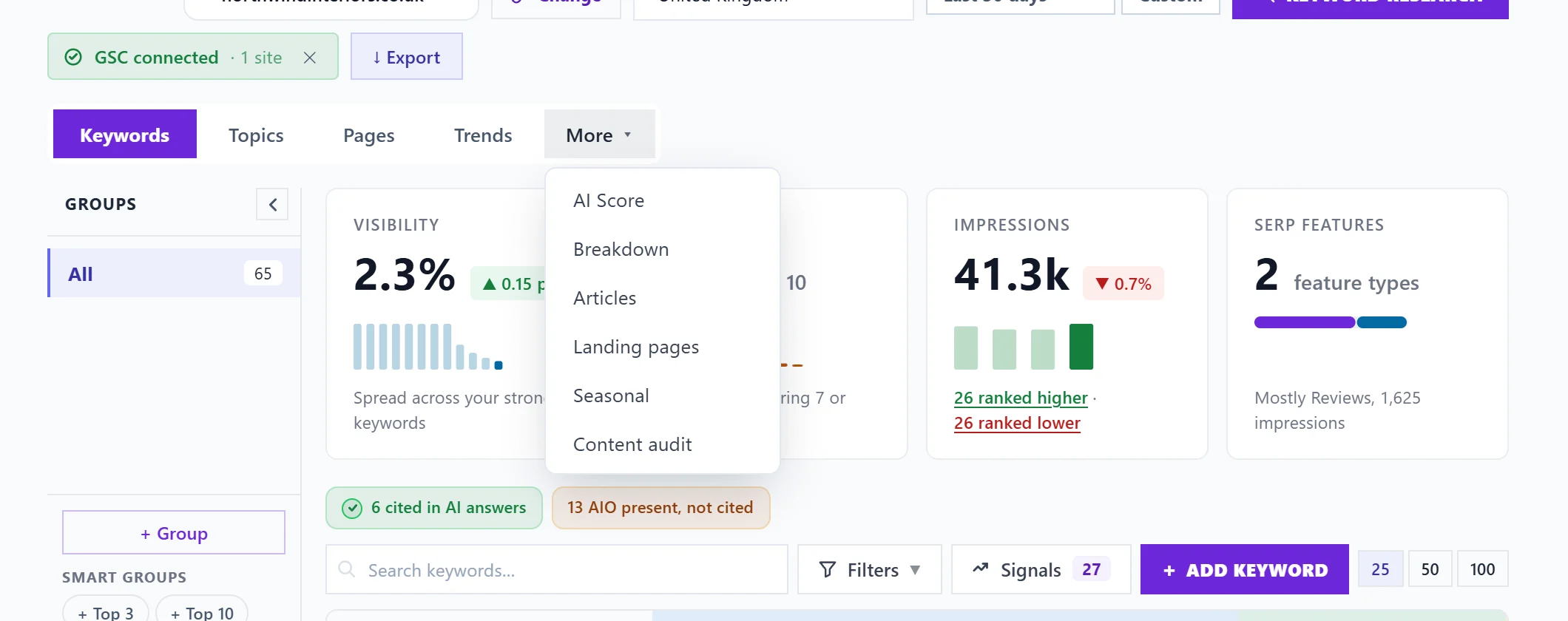
On the Keywords page, open More, then Seasonal. It reads a year of your Search Console data, finds the searches that rise and fall with the seasons, and shows each one's peak months on a calendar. Press Plan a post before the peak to put a post in your blog plan six weeks before the busiest month.
How it works
The first time you open the tab it reads 12 months of keyword data, finds the searches that follow a seasonal pattern and works out each one's peak months. This takes 10 to 20 seconds.
It needs at least four months of data with clear peaks. If nothing seasonal is found, it says so; try again once the site has more history.
What you see
- Seasonal keywords: how many of your searches follow the seasons, out of those analysed.
- Avg seasonality: how much higher the peak is than the quietest month, on average.
- Busiest month: the month most of your seasonal searches peak.
- Your year: a calendar bar for each month, taller where more demand arrives. In season now, Next month and the months after are marked, because content needs about six weeks to settle: act before the bar, not on it.
The table
Each seasonal search with its season (winter, spring, summer or autumn), how seasonal it is, its peak months, a small monthly trend line and total impressions. Search the list or filter by season. Open a row for its average and peak impressions a month and its low season.
Act on one
- Plan a post before the peak adds a post to your blog plan, dated six weeks before the peak month. Set up your blog plan first.
- Refresh the page instead adds a to-do with the steps: find the page that ranks for the search, update its facts, dates and examples, and link to it from your homepage or menu while it is in season.
See the blog plan.
Questions people ask
Why is my seasonal list empty?
The site needs at least four months of Search Console data with clear ups and downs. A new site, or one whose searches are steady all year, may show none.
Is this based on how many people search?
It is based on your own impressions in Google, month by month, so it shows when people search and find you. For Google's own monthly search counts over 12 months, see the Trend column in keyword research.